The State University of Campinas / BRAZIL
The State University of Campinas (UNICAMP) / BRAZIL
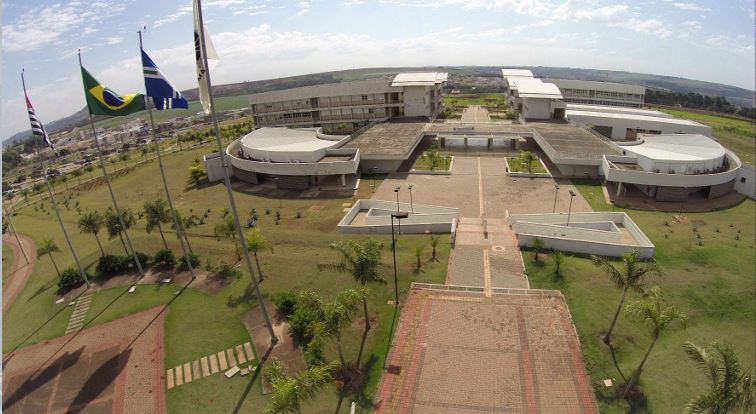
The State University of Campinas, commonly known as Unicamp, is a public research university in the state of São Paulo, Brazil. It ranks second in the country according to the Webometrics global ranking. Students enrolled in the first year of the Master's Degree in International Relations (LM-52), specifically within the International Economic Relations curriculum, can apply for the Double Degree program. Selected students will spend one or two semesters of their master's program studying at the partner university.
The Universidade Estadual de Campinas is one hour drive from São Paulo.
APPLICATION/ REQUIREMENTS
Each academic year, students enrolled in the Master’s degree program in International Relations, in the International Economic Relations curriculum, may apply for the Double Degree Program.
Upon enrollment in the Master’s Degree in International Relations, students must apply for admission to the Double Degree Program via the official call for applications, which is typically published on the webpage around October of each academic year;
The selected students, will spend the semester (August - December 2027) at UNICAMP, in order to take the courses in the "Administration"degree program.
LANGUAGE SKILLS
Minimum English proficiency requirement: B2 level.
SEMESTER TIMES
First semester (August – December) or Second semester (February- July)
STUDY PLAN/COURSES SELECTION
The total period of stay must be between 6 (six) months and 1 (one) year. During this mobility, students are required to earn at least 32 ECTS credits for a six-month stay or 60 ECTS credits for a full year.Students must draw up a Study Plan (Learning Agreement, Appendix B) that includes the list of courses to be taken abroad—along with their respective syllabi—and the corresponding equivalent courses offered by the University of Macerata. This plan must align with the student’s course of study at the host institution (refer to Annex 2.A of the Agreement) and must be signed by both the student and the academic coordinator of the Agreement.
If any changes to the Study Plan become necessary after arrival at the partner university, they must be formalized within one month. Any subsequent modifications must be agreed upon by the student, the professor in charge of the Agreement, and the coordinator from the host university.With prior authorization from the Double Degree program coordinators, students may also attend and take additional courses offered by either university that are not included in the official study plan. These extra courses will be recognized as supernumerary and will not contribute to the calculation of the final graduation grade. At the end of the exchange period, the host university will provide the partner university with an official transcript of the exams the student has taken and passed.
MASTER THESIS
A student’s Master thesis is supervised by 2 (two) supervisors, with 1 (one) supervisor from each University.
Students must write the final thesis in English.
The Examining Committee of the defense, designated by the partner institutions, will be composed of at least four members, among which will be the two supervisors of the dissertation.
At the end of the program, students will obtain, in addition to the UniMC Master's Degree in International Relations, a Master's Degree in Administration issued by the Universidade Estadual de Campinas.
FEES, EXPENSES, SCHOLARSHIPS
Students will pay tuition fees exclusively in their home university and will be admitted to the partner university on a reciprocal basis.
A financial contribution to the UNIMC student(s) will be granted by the home University (Department of Political Science, Communication and International Relations).
The organization of stay at UNICAMP (visa, travel, insurance, board, lodging, enrolment in language courses) is entirely at the expense of the student awarded the economic contribution, who may consult the Professor coordinator of the Double Degree program for any clarifications of an educational, logistical and organisational nature.
USEFUL TIPS: